
Non-stick surface technology

By Hilda Kafui Nuworku [3min read]


Non-stick is a surface engineered to reduce the ability of other materials to stick to it.

Non-stick is often used to refer to surfaces coated with Polytetrafluroethylene (PTFE), but in the 21st century other coatings have been marked as non-stick, such as anodized aluminum,  ceramics, cast iron, carbon steel and many others.

Cast iron, carbon steel, cast aluminium and steel cookware may be seasoned by applying fat to the surface and heating to polymerize the fat.


This produces a dry hard smooth, hydrophobic coating, which is non-stick when food is in it.

Polytetrafluroethylene is a synthetic fluoropolymer or tetrafluoroethylene that has numerous applications.

Its well known brand is Teflon®, by Chemours,  a polymer company.
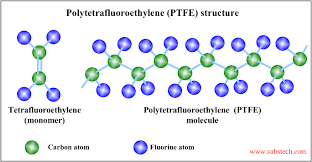

PTFE molecular structure. PC: susbtech.com


Properties of PTFE:
  • It's a fluorocarbon solid, with a high molecular weight.
  • It's hydrophobic due to the high electronegativity of Fluorine.
  • It has one of the lowest coefficient of friction of any solids.
  • It is non reactive partly due to the strength of the carbon- fluorine bond.

Uses of PTFE
  • It is frequently used as coating on Catheters, interfering with the  ability of bacteria and other non infectious agents to adhere to catheters.
  • It is often used in containers and pipe works for reactive and corrosive chemicals.
  • It is also most commonly used as coating in saucepans and other cooking utensils, thus preventing food from sticking to the otherwise raw surface of the utensil.

Editor's note
Materials Science and Engineering is always at the forefront of making life more convenient and comfortable by improving existing materials and developing new ones that advance technology.

With current materials technology trends such as Nanotechnology, Smart Materials, Supercapacitors, Flexible Electronics and the miracle material, Graphene, MSE is fast changing the face of science and technology as we accelerate into the future.

Want to take a Materials and Metallurgical Engineering (MSE & METE) tour at KNUST? Visit our department website, mateng.knust.edu.gh. At DMSE KNUST, we provide the foundation in MSE and METE, which, when coupled with your creativity and daring, can cause a material change in our world.


Comments

Post a Comment

See Also

 Meet our personality of the week,our Immediate Past President Mr.Samuel Kweku Afari Can you tell us about yourself?   I am Samuel Kweku Afari, born on the 4th of March 1998. I am 23 years of age and I pride myself to be the only child of my parents. I come from Abesim in the Bono Region where I started the earlier part of my junior high education at Sacred Heart Preparatory School.  I moved to Tarkwa to continue my junior education at Golden Age School complex and that is where I had my Basic Education Certificate after completion in 2014. By God’s grace, I went on to have my senior high school education at St John’s School in Sekondi where I read General Science. Whilst in St. Johns School I served as the Sports Prefect (2016/2017). I completed St. Johns School in the year 2017 and by God’s grace had the opportunity to start my university education the same year at my dream university, KNUST.  I am currently in my final year reading BSc. Metallurgical Engineering a...

Seater of The Week: Mr Abdul Latif Abubakar

Meet our Sports Personality of the Week, Mr Abdul-Latif Abubakar: a hard working gentleman and the current MATESA electoral commissioner. Mr.Latif - SOTW Who is Mr.Latif Abubakar?(Relationship status:dating, broken up, gnashing) Well, this question is a bit difficult to answer since day in and day out, people change and grow. But I will say Abdul Latif Abubakar is a young hard working gentleman who believes in self-discipline. Ha-ha, sure I’m dating. Share with us your experience in secondary school.What is the worst you ever did in school you really regret. I attended T.I. Ahmadiyya Senior High School, Kumasi (Real Amass). My SHS life was very fun and nice. I will say, I didn’t really struggle over there; and because I was a very hard working and discipline guy, everyone liked me. Oh not really (on the worst thing) but I think my only regret was forcing some mates to adhere to the school rules and regulations since I was a prefect. Why did you choose KNUST over t...

Researchers Discover New Useful Nanostructure for Composite Material

Biwu Ma, professor of chemistry and biochemistry  Florida State University researchers have discovered a novel structure for organic-inorganic hybrid materials that shows potential for more efficient technologies. Professor of Chemistry and Biochemistry, Biwu Ma, and his team have published a new study in the journal Science Advances, that explains how they created a hollow nanostructure for metal halide perovskites that would allow the material to emit a highly efficient blue light. Metal halide perovskites are materials that have shown great potential for photon-related technologies such as light-emitting diodes and lasers, but scientists have still been working to make them more efficient and effective. "The fabrication of new-generation color displays and solid-state lighting requires luminescent materials and devices of the three primary colors: red, green and blue (RGB)," Ma said. "Although multiple ways of color tuning have been demonstrated for perov...

Seater of The Week--Nana Kwame Asa-Mensah

Nana Kwame, aka DJ Enkay In today's edition of Sports Seat we come across a hardworking, committed and good-humoured young man of the Department. He tells us about himself, MATESA and also sports (football). Enjoy! Who is Mr Asa-Mensah Kwame? ( Mandatory: relationship status--single, married, broken up (ended in tears) or crushing?) I am Nana Kwame Asa-Mensah, a third year Metallurgical engineering student. I'm 20 years old and in Evandy hostel. I attended Mfantsipim school and I'm a jovial person. I am not single. Saa? What was your experience like in secondary school? Attending a boys' school is fun and challenging because of the high peer influence and one could easily fall prey but enjoyable because of all the fun and excellence accredited to a school like mine. Metallurgical Engineering. Were you given the programme or you really wanted to do it? What informed your decision if you chose it? Personally, I wanted to study Petrochemical Engineeri...

Sports Seater of The Week: Raphael Kwasi Sarfo Gyebi

Ralph Gyebi (SOTW) Meet Ralph on Sports Seat today, a fine gentleman and prospective metallurgist. Certainly the crush of many MATESA ladies (Hahaha).  Please tell us about yourself. (Relationship status: Gnashing, dating broken up, crushing, etc). Well, I'm Raphael Kwasi Sarfo Gyebi, a 3rd year Metallurgical engineering student. An old boy of Mfantsipim school. I love sports and arts. I find humour in almost anything. And I'm single, hahaha. Share with us your experience in secondary school. Secondary school was fun, having attended a boys school. The learning and church service and craziness that came with entertainment made SHS worthwhile. In the long run, it built our persona in every aspect of our lives, Mentally, emotionally, and spiritually hei, devotion on weekdays and morning and evening service on Sunday no be joke. Metallurgical Engineering, were you given the programme or you chose it? I chose it as my last choice and It was given to me. But I...

The Natural Polymer That Controls Life - DNA!

Some life-forms on earth. PC: Micro [5 min read] In today's post on MATESA TODAY , we want to learn about a natural polymer (giant molecule) that controls all life-forms on Earth - in plants, animals, micro-organisms, etc. This wonderful material carries the instructions that are associated with the transmission of genetic information: the shape of your nose, the colour of your eye, people's height, their skin colour, etc.  This publication gives us some basic insight into  DNA . Sounds quite biochemical, but it has got the Materials Science aspect too - Polymers; though materials scientists primarily deal with synthetic polymers. But we usually take inspiration from nature to do new stuff, more technically, develop novel products. After all, we call it genetic material ! BASIC TERMS DEFINED Polymer means "many parts" and designates a large molecule made up of smaller repeating units. Monomer is a molecule that combines with other molecules of the same ...

New 'Artificial Leaf' That Converts Carbon Dioxide Into Fuel

Scientists have created an “artificial leaf” to fight climate change by inexpensively converting harmful carbon dioxide (CO2) into a useful alternative fuel. The new technology, outlined in a paper published on November 4, 2019, in the journal Nature Energy, was inspired by the way plants use energy from sunlight to turn carbon dioxide into food. “We call it an artificial leaf because it mimics real leaves and the process of photosynthesis,” said Yimin Wu, an engineering professor at the University of Waterloo who led the research. “A leaf produces glucose and oxygen. We produce methanol and oxygen.” Making methanol from carbon dioxide, the primary contributor to global warming, would both reduce greenhouse gas emissions and provide a substitute for the fossil fuels that create them. The key to the process is a cheap, optimized red powder called cuprous oxide. An hour-long chemical reaction creates the engineered red powder that is the key to new technology to tur...

History of Man As Determined by The Prevailing Materials Technology of a Particular Era

Compiled by Abena Osei-Anane   [5 min read] The ages of materials technology - PC: pininterest.cl Earth’s beginnings can be traced back 4.5 billion years ago, but human evolution only counts for a tiny speck of its history. The pre-history period where there was no documentation of human activities roughly dates from about 2-5 million years ago to 600BC and is categorised in three archaeological periods: the Stone Age, Bronze Age and Iron Age . These periods are characterised by the prevailing Materials Technology present at a particular time. STONE AGE Getty images The Stone Age was the first age and the longest, from 30,000BC to 3,000BC. This era was marked by the use of stones to make tools and weapons . During the paleolithic period, early humans lived in small caves and were mostly hunters. They used basic stone tools as well as stone axes for hunting birds and other wild animals. They were the first to leave behind art by carving small figurines from stones,...

The Quality of Locally-manufactured Cornmill Grinding Plates

Corn mill A KNUST research has revealed people who consume corn-related foods risk contracting all kinds of cancers According to the research, the locally manufactured machine used to grind the corn into dough food wears off faster into the dry maize, thus contaminating it. A study by two lead researchers at the Kwame Nkrumah University of Science and Technology (KNUST) has revealed that consumers of corn-related foods risk contracting all kinds of cancers. The research was undertaken by Prof. Kwofie, who is the Dean of the Faculty of Mechanical and Chemical Engineering (former) of the College of Engineering, and Dr. Anthony Andrews (now Professor) , the Head of Department (former)  for Materials Engineering . The study found that the metals used for the milling plates usually wear off when the food products are being grinded. This, the study said, opens consumers to the risk of contracting cancer, since the metals contain 'iron overloads' which are poisonous. ...

The Miracle Metal: Steel!

Steel pipes. PC: qswownews.com BRIEF HISTORY OF STEEL Steel has been widely regarded as the ' miracle metal ', especially of the modern era. This is because of its diversity in property and widespread applications in many different areas. One of the earliest forms of steel, blister steel, began production in Germany and England in the 17th century and was produced by increasing the carbon content in molten pig iron using a process known as cementation. In this process, bars of wrought iron were layered with powdered charcoal in stone boxes and heated. Steel is all around us. It is used in major constructions such as skyscrapers, stadiums, roads and railways , as well as smaller product designs such as bolts, nails and screws. Steel in also used in vehicles, kitchenware, electronic equipment, and a whole lot more. WHAT IS STEEL? Steel is an alloy of Iron (Fe) and Carbon C in which the carbon composition is less than two percent (2%). The 'counter-material' of...